In a nutshell
- 🍋 Use a lemon’s citric acid to dissolve limescale, grease and soap scum, lifting years of grime from grout safely on ceramic, porcelain and cement-based lines.
- ⏱️ The five-minute method: apply lemon juice, wait 60–90 seconds, scrub with a stiff brush, wipe with a microfibre cloth, then lightly rinse—working in small sections for speed.
- 🧪 Safety and stains: patch test first, avoid natural stone, never mix acids with bleach, wear gloves; use lemon + bicarbonate of soda paste for tough marks and hydrogen peroxide for mould; reseal grout within 24 hours.
- 🧰 Simple toolkit: 1–2 lemons, warm water, stiff brush/toothbrush, and microfibre cloth—enough to refresh a typical kitchen or bathroom quickly.
- 🌍 Cost and eco wins: usually under £1 per room, fewer plastic bottles, biodegradable action; maintain with a weekly damp mop and a monthly citrus sweep for lasting shine.
Britain’s bathrooms and kitchen floors have a common villain: dingy grout that steals the sheen from otherwise spotless tiles. The fix may be sitting in your fruit bowl. A fresh lemon can strip away years of grey without harsh chemicals, and it does it fast. This swift trick works in about five minutes. The secret is citric acid, a gentle yet effective cleaner that tackles mineral haze, soap scum, and everyday grease. It smells clean, costs pennies, and feels oddly satisfying. If you’ve been scrubbing for ages with little joy, this is your shortcut to a bright, clean floor with minimal effort.
How a Lemon Lifts Years of Grime
At the heart of the lemon’s magic is citric acid, a mild acid that dissolves alkaline residues such as limescale and grout haze, and breaks the bond between oils and mineral deposits. In grout lines, grime often binds to tiny pits in the cement, creating a stubborn film that resists ordinary mopping. Citric acid disrupts that film, loosening it so a quick brush can whisk it away. The juice’s low pH also helps to neutralise odours, and its light degreasing action proves surprisingly effective against kitchen splatters. The result is instant clarity around the tile edges, which makes the whole floor look newly laid.
There are limits. Always test on an inconspicuous patch first, especially on natural stone such as marble, limestone or travertine, which can etch when exposed to acids. Ceramic and porcelain tiles are typically safe, as is most cement-based grout, but a patch test keeps you honest. If you’ve applied a grout sealer, lemon won’t remove it, but it may temporarily dull very high-gloss stone sealers. Rinse well, dry promptly, and you’ll see why a humble lemon is a clever, low-tech way to restore definition to your tiles without clouding the air with harsh cleaners.
The Five-Minute Method, Step by Step
Gather your kit first. Keep it tight and simple; speed is the point. Aim for small sections so the juice stays active while you scrub, and then move on quickly to the next row of tiles.
| Item | Purpose | Guide |
|---|---|---|
| Lemon (halved) | Applies citric acid | 1–2 lemons per medium kitchen |
| Small bowl of warm water | Light rinse between passes | Top up as needed |
| Stiff brush or old toothbrush | Agitates loosened grime | One per person |
| Microfibre cloth | Final wipe and shine | 1–2 cloths |
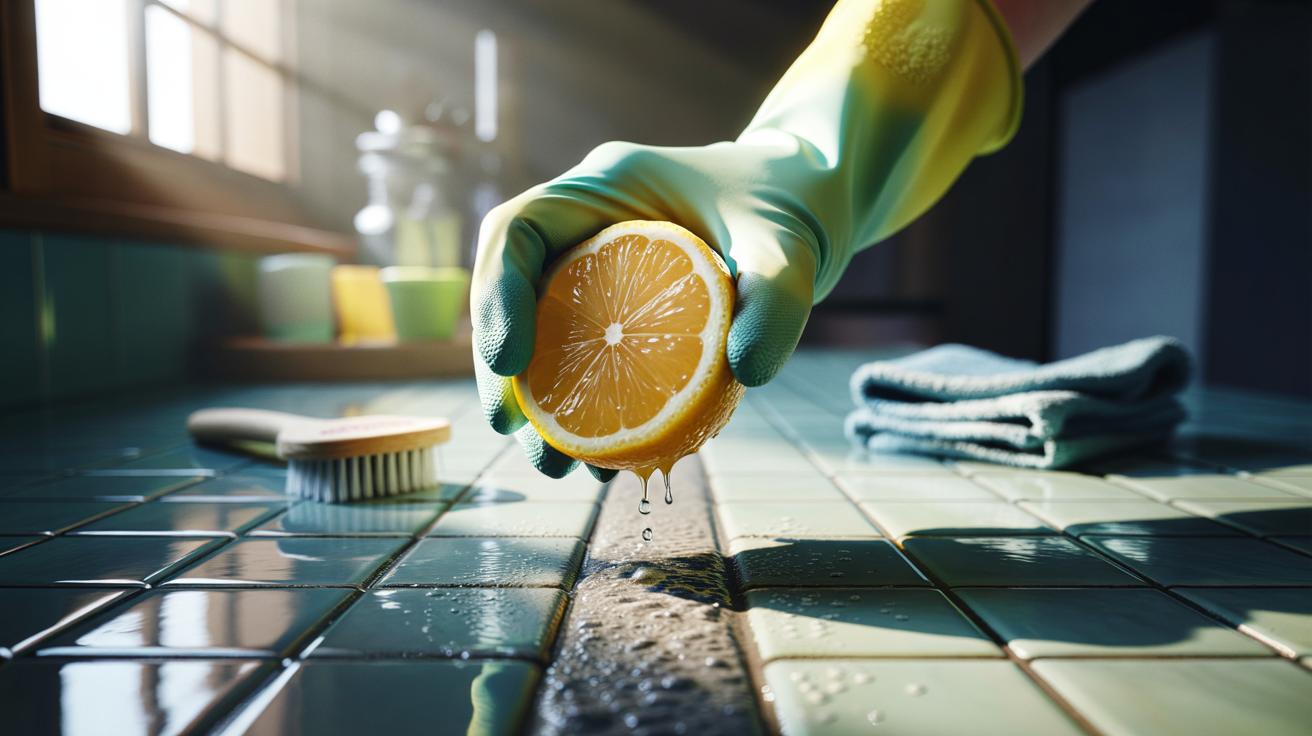
1) Slice a lemon and squeeze directly along a grout line. 2) Wait 60–90 seconds while the juice fizzes quietly at work; don’t let it dry. 3) Scrub in short strokes with a stiff brush. You’ll see the line brighten almost immediately. 4) Dip your cloth in warm water, wring, and wipe away grey residue. 5) Repeat on the next strip. Rinse the floor lightly after the final section to remove any remaining acid and loosened soil. Working in tiles-wide sections keeps the process genuinely brisk; a small kitchen or bathroom usually takes about five minutes to look dramatically cleaner.
Stains, Seals, and Safety: What to Know
Lemon excels at everyday grime but plays differently with stubborn stains. For tea, curry, or old grout shadowing, make a paste: one part lemon juice with two parts bicarbonate of soda; dab, wait three minutes, scrub, rinse. For dark mould speckles on silicone, switch to hydrogen peroxide (3%) on a cotton bud rather than bleach, which can damage nearby grout. If your grout is unsealed and especially porous, expect faster brightening, but also faster re-soiling. Consider resealing cleaned grout within 24 hours with a water-based sealer to lock in the fresh look and make future wipes almost effortless.
Safety is simple. Wear light gloves if you have sensitive skin. Ventilate modestly, though lemon’s vapour is gentle compared with many cleaners. Never mix acids with bleach—this can release dangerous chlorine gas. If you’ve used a bleach product recently, rinse thoroughly, let the area dry, then return another day with lemon. Avoid natural stone that’s calcareous; for marble or limestone, use a pH-neutral stone cleaner instead. Finally, keep a microfibre routine: once a week, a damp mop with hot water preserves that citrus-fresh clarity far longer than you’d think.
Cost, Time, and Sustainability Gains
A lemon is a budget cleaner with newsroom-friendly numbers. A single fruit costs well under a pound and covers a typical British bathroom. That’s a fraction of branded grout gels. Time is lean too: five minutes for a visible refresh, perhaps ten for a full kitchen. The environmental win is real. You cut plastic bottles, skip harsh surfactants, and often use a lemon that might otherwise linger in the bowl. Compared with strong acids, citric acid is biodegradable and low hazard when rinsed. Pour residues down the sink with plenty of water and you’re done. Small swaps reduce chemical load without sacrificing results, which is why professional housing reporters hear the same refrain from facilities teams: simple, repeatable methods last.
With a lemon, a brush, and five spare minutes, you can turn cloudy grout lines into crisp borders that make the whole room read cleaner and brighter. It’s tactile. It’s quick. And it respects both your budget and your lungs. The secret is consistency: a monthly citrus sweep keeps build-up from returning, turning deep cleans into light touch-ups. Ready to reclaim that just-laid look—and will you try the five-minute lemon method on your kitchen or start with the bathroom first?
Did you like it?4.5/5 (21)