In a nutshell
- 🧪 Aluminium foil lifts rust via gentle abrasion and a mild redox assist with salt or white vinegar; it’s softer than steel, so scratches are minimal—just rinse and dry immediately to prevent flash rust.
- ⏱️ The three-minute method: wash, crumple foil (shiny side out), dip in warm water + salt or white vinegar, rub lightly for 1–3 minutes, then soap, rinse, and dry thoroughly; finish with a drop of food-safe mineral oil if desired.
- 🛡️ Safe for stainless steel cutlery, but avoid on silver/silver-plated items, coated finishes, and patinated high-carbon blades; test a small area, keep grit away, and never mix with strong chemicals like bleach.
- 🧩 Troubleshooting: for stubborn spots, use a bicarbonate of soda paste with foil; deep pitting may be permanent. Prevention matters—hand-dry, avoid acidic residues, ventilate storage, add silica gel, and apply a light oil barrier.
- ✨ Results and value: shine returns fast, using low-cost kitchen staples; a quick, science-backed clean that keeps your tableware guest-ready with minimal effort.
Rust freckles on forks and knives make even a well-laid table look tired. The fix doesn’t need specialist pastes or hours of scrubbing. With a sheet of aluminium foil, a splash of kitchen staples, and three focused minutes, you can lift those orange stains and restore the mirror. The trick blends gentle abrasion with a smart chemical nudge, so your stainless steel cutlery regains its clean, bright edge without harsh scratching. It’s quick. It’s cheap. It’s oddly satisfying. Below, you’ll find the why, the how, and the crucial care notes that keep the shine lasting far beyond tonight’s supper.
Why Aluminium Foil Works on Rust
Aluminium sits lower than iron on the reactivity ladder, which is why a crumpled ball of aluminium foil can do more than scrape: it can assist a tiny redox exchange that helps loosen iron oxide (rust). Dipped in water—with a pinch of salt or a few drops of white vinegar—the foil becomes part of a mild, localised electrochemical system. As you rub, two things happen. First, the foil provides very soft, controlled abrasion that breaks up surface-scale rust without gouging the steel underneath. Second, in the presence of an electrolyte, aluminium tends to oxidise readily, which encourages the rust layer to destabilise and lift.
Because aluminium is softer than stainless steel, the risk of deep scratches is low, especially if the surface is kept wet and free from grit. You’ll feel the rust dissolve into a dark, tea-coloured slurry that wipes away cleanly. Always rinse and dry immediately after treatment to prevent “flash rust,” the light re-oxidation that can appear if water sits on steel. For light speckling, the reaction is fast—often under three minutes—making this a practical rescue when guests are en route.
The Three-Minute Method, Step by Step
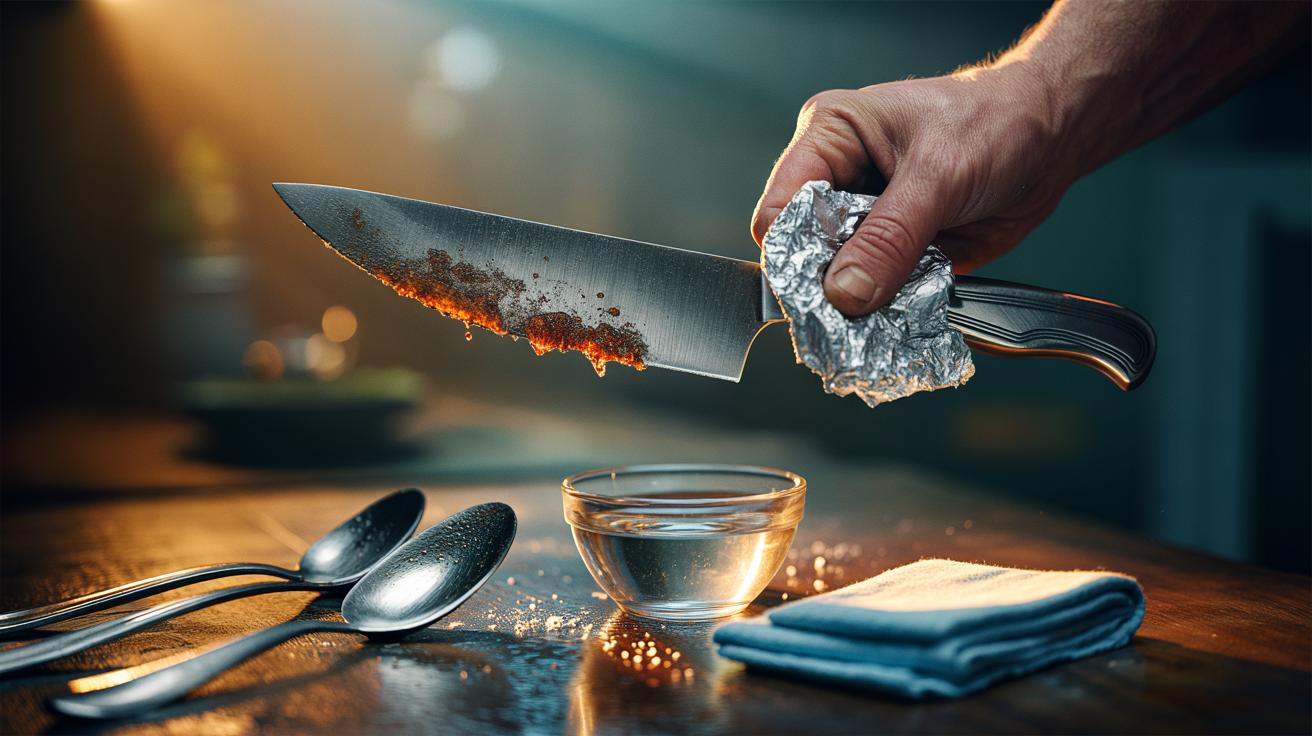
Start by washing the cutlery with warm soapy water to remove grease, then rinse. Crumple a palm-sized piece of aluminium foil, shiny side out, into a loose ball—it increases contact points. Prepare a small dish of warm water with either a teaspoon of salt or a tablespoon of white vinegar. Dip the foil into the liquid and gently rub the rusty areas in small circles. Pressure should be light to moderate; let the chemistry and micro-abrasion do the heavy lifting. You’ll see the orange bloom fade quickly. Re-wet the foil frequently, and turn the ball to a fresh facet when it darkens.
After 60–120 seconds, wipe the area with a damp microfibre cloth. If any spots remain, repeat for another minute. Finish by washing the piece with dish soap, rinsing under hot water, and drying thoroughly with a clean towel. Do not leave the cutlery to air-dry—water droplets invite new rust. For a mirror finish, buff with a drop of food-safe mineral oil, then polish dry. Below is a quick reference for materials and measures.
| Item | Purpose | Approx. Amount |
|---|---|---|
| Aluminium foil | Gentle abrasion and redox assist | 1 hand-sized sheet |
| Warm water | Lubrication and rinse | 1 small bowl |
| Salt or white vinegar | Light electrolyte to speed action | 1 tsp salt or 1 tbsp vinegar |
| Dish soap + microfibre cloth | Final clean and polish | A few drops + 1 cloth |
Safety, Care, and When Not to Use It
This technique is safe for most stainless steel cutlery, including everyday knives, forks, and spoons. That said, context matters. Avoid using aluminium foil on silver or silver-plated cutlery—use a silver-specific method instead. Likewise, skip it for decorative coatings (blackened, titanium, or painted finishes) where abrasion, however gentle, may dull the surface. On high-carbon steel chef’s knives that develop a protective patina, use discretion: the foil can strip character along with rust. Always test a small, inconspicuous section first.
Mind your pressure. Grit trapped between foil and metal can introduce scratches, so rinse both frequently. Wear light gloves if you have sensitive skin; salt and vinegar can be drying. Once cleaned, wash thoroughly with warm, soapy water and rinse well to remove any residue before the cutlery touches food again. Store pieces fully dry. Moisture is the main enemy—never leave a damp bundle of knives in the rack overnight. Finally, keep the foil away from electrical outlets and avoid mixing with strong chemicals like bleach; you need only simple, kitchen-safe ingredients.
Troubleshooting and Longer-Term Prevention
Still seeing small orange flecks after your first pass? Increase contact time: re-wet the foil and work methodically, giving each patch 10–15 additional seconds. For stubborn pits—tiny cavities where rust has bitten deeper—switch to a paste of bicarbonate of soda (baking soda) and water, rub with foil, then rinse and dry. If the metal shows dark pitting that catches a fingernail, the damage is permanent but can be smoothed visually. In severe cases, consider a dedicated stainless polish or professional refinishing.
Prevention is easy and saves time. Hand-dry straight from the dishwasher if your machine leaves droplets. Don’t let acidic residues—tomato, citrus, or vinegar dressings—sit on blades. Store cutlery in a ventilated drawer; add a small silica gel sachet if your kitchen runs humid. Every few weeks, a whisper of food-safe mineral oil on knife blades forms a barrier against moisture. Routine drying and smart storage beat any cleaning trick, every time. Keep a roll of foil in the drawer: it’s the quickest rescue when life happens and the orange speckles return.
Three minutes, one sheet of aluminium foil, and a bowl of kitchen staples can turn tired, speckled cutlery into something you’re proud to plate. This method blends science with practicality, avoids harsh chemicals, and respects the balance between shine and surface integrity. The key is simple: act fast, keep it wet, and dry thoroughly. Your tableware will repay the small effort with years of service and a clean, confident gleam. What piece in your drawer most deserves a quick foil-powered revival today, and what will you serve with it once the shine is back?
Did you like it?4.4/5 (30)