In a nutshell
- 🐜 A chalk line disrupts pheromone trails, creating a physical barrier that makes ants hesitate and turn back—often within 30 seconds.
- ✏️ For best results, clean the entry strip, draw a thick line 2–3 cm wide (go over twice), and consider a double band across doorways; refresh after cleaning or rain.
- 🧪 Choose chalk wisely: calcium carbonate for indoors, gypsum for wood/laminate, pavement chalk outdoors; avoid so‑called “miracle” insecticidal chalk, which is not approved in the UK.
- 🛡️ Treat it as a stopgap: combine with tight sanitation (crumb control, sealed sugars) and species-appropriate baits placed away from the chalked threshold.
- 🇬🇧 Stay compliant and effective: use HSE-approved gels/bait stations; stubborn infestations—especially Pharaoh ants—may require a BPCA professional for building-wide control.
Ants march with purpose, following trails we can’t see, but you can stop them cold with something as humble as chalk. In many UK homes, a quick, firm line across a doorway or window ledge makes invaders hesitate, bunch, then turn back. It looks like magic. It isn’t. The trick exploits how ants navigate, how their feet grip, and how their chemical highways are laid. Drawn correctly, a chalk barrier can halt a column in seconds, not hours, buying time to tidy crumbs, seal gaps, and plan a longer-term fix. This is a fast, low-cost tactic, not a silver bullet. Here’s how it works, and when to use it.
Why Chalk Stops Ants So Fast
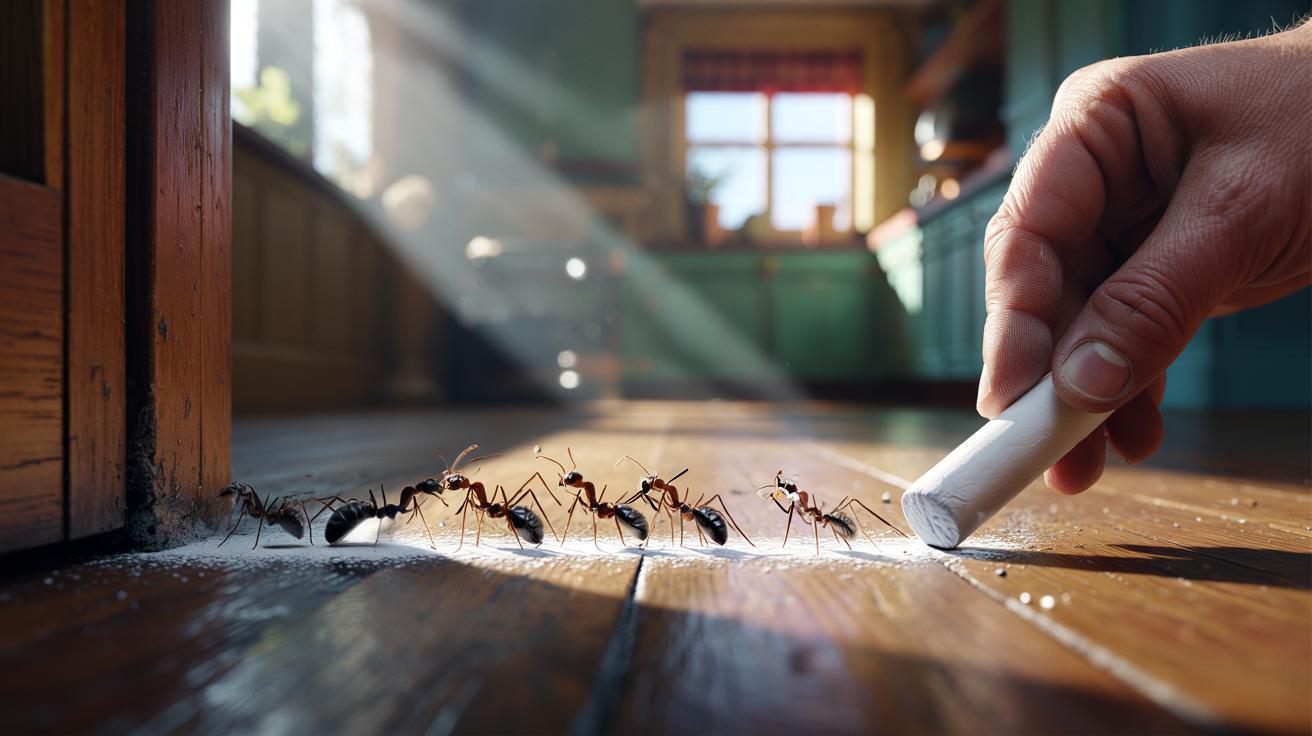
Ants follow a pheromone trail laid by scouts. That invisible line is their satnav, keeping dozens, sometimes hundreds, in single-file. A chalk line interrupts that chemical roadmap in two ways. First, fine mineral particles clutter the surface, creating a dusty band that clings to antennae and legs. Second, the line acts like visual and textural “noise,” forcing a pause while workers reassess. Watch closely: within 30 seconds of contact, many black garden ants (Lasius niger) stall at the edge, mill around, then divert. They don’t vanish. They decide not to cross. Disruption, not destruction, is the secret here.
There’s chemistry too. Typical school chalk is calcium carbonate or gypsum. It’s mildly alkaline, absorbs trace moisture and odours, and breaks up a track just enough to muddle scent cues. Crucially, this is a physical barrier, not a poison, so you’re not contaminating food areas. That makes it handy near skirting boards and thresholds. Caveat: species differ. Pharaoh ants (Monomorium pharaonis) are smaller and more erratic; they may skirt the line more quickly, especially on uneven or damp surfaces where chalk adherence is poor.
How To Draw a Barrier That Works in 30 Seconds
Find the entry point first. Follow the column back to a crack, cable hole, or the gap under a door. Clean a narrow strip with a dry cloth; dust and grease weaken the barrier. Now draw a slow, thick line, 2–3 centimetres wide, edge to edge. Press hard. Go over it twice. A crisp edge helps. For wider doorways, draw a second parallel line, leaving a finger-width gap; tests show a double band delays crossings longer because it forces ants to reassess twice. Most household species balk quickly, often within half a minute.
Refresh after mopping, rain, or heavy foot traffic. Use standard white school chalk or pavement chalk. Avoid oil-based crayons; they smear without adding texture. Keep pets and children from smudging the line, and don’t inhale dust while drawing. If you’re treating a kitchen, wipe away food residues first. That removes competing odours and lowers the incentive to breach. Then, set a bait station away from the chalked zone to draw workers outside the home. The chalk buys you calm; the bait solves the cause.
| Chalk Type | Best Surface | Approx. Longevity Indoors | Notes |
|---|---|---|---|
| Calcium carbonate school chalk | Painted skirting, tiles | 6–24 hours | Reliable texture; easy to clean. |
| Gypsum (calcium sulfate) chalk | Dry wood, laminate | 4–12 hours | Slightly softer; redraw sooner. |
| Sidewalk/pavement chalk | Concrete thresholds | 2–8 hours (dry) | Good outdoors; rain removes it fast. |
| “Insecticidal” miracle chalk | None | — | Not approved in the UK; avoid and dispose safely. |
Limits, Safety, and Smarter Next Steps
Chalk is a stopgap. It reroutes, it doesn’t remove. If ants are nesting in cavity walls, they will simply try another crack tomorrow. That’s why pairing a barrier with sanitation and baits matters. Store sugars in sealed jars. Vacuum crumbs. Rinse recycling. Place a protein or carbohydrate bait (depending on season and species) along active trails away from the chalked threshold, so you don’t block access to the bait. Never dust bait stations with chalk; you’ll sabotage your own solution.
Legal note for UK households: avoid so‑called “Chinese” insecticidal chalk. It often contains unlabelled synthetic pyrethroids and is not authorised for domestic use here. Stick to approved ant gels or bait stations with clear labels and HSE numbers. If you’re seeing persistent Pharaoh ants in flats, DIY measures can backfire by scattering colonies. That’s the moment to call a BPCA-member professional who can identify the species and deploy targeted, building-wide control. Chalk lines still have a role. They protect your worktops today while a longer plan takes effect.
Used wisely, a chalk line is a journalist’s favourite kind of home hack: cheap, quick, and surprisingly grounded in science. It slows ants at the door, gives you breathing space, and keeps kitchens calmer while you cut off attractants and place baits correctly. Think of chalk as a speed bump, not a roadblock. If you try it, time the effect, film the crowding at the edge, then tweak line thickness and placement. What entry point will you target first, and how will you combine that 30-second pause with a lasting fix?
Did you like it?4.4/5 (23)