In a nutshell
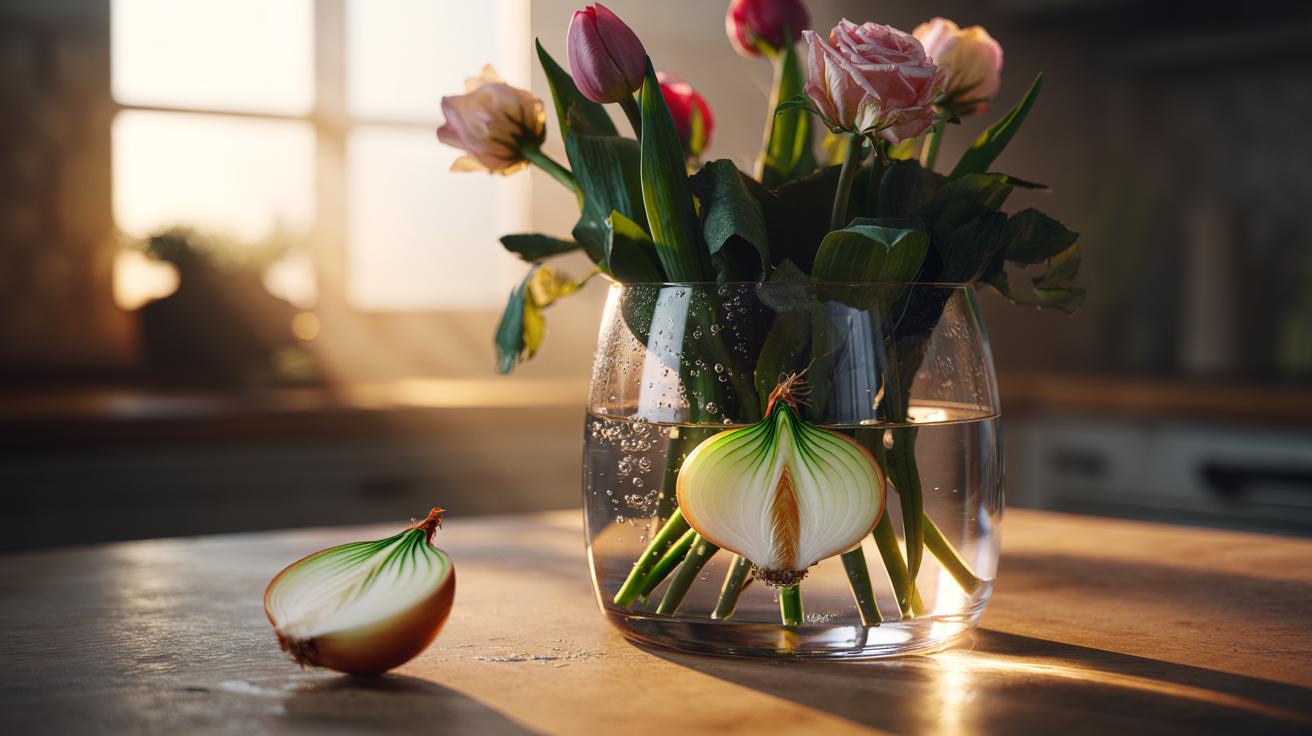
- 🌼 An onion wedge in the vase can revive wilted blooms by inhibiting bacteria and lowering pH to improve uptake, with petals perking in about 3 minutes when paired with a fresh cut.
- ⏱️ Step-by-step: clean the vase, fill with tepid water, re-cut stems at 45°, strip submerged leaves, add a thumb-sized onion wedge, then swirl and space stems for flow.
- 🧪 Why it works: onions release sulphur compounds and mild acids that act as antimicrobial agents and a rough preservative, complementing the immediate boost from proper stem and water care.
- 🗂️ Best uses: especially helpful for roses, tulips, and chrysanthemums; change water within 24 hours and optionally add a touch of sugar and lemon to mimic florist solutions.
- ⚠️ When to skip: avoid in small, scent-sensitive spaces, pet-accessible vases, or with delicate wildflowers; hydrangeas need alum or searing, and truly spent blooms will not rebound.
Vase drama. We have all seen it: one minute your bouquet radiates colour and poise, the next it slumps like a rained-on hat. In kitchens across Britain, a surprising fix is making the rounds—slipping an onion into the vase to revive wilted flowers. It sounds like folklore, yet the logic is quietly practical and the results can be startlingly swift. Handled correctly, some blooms visibly perk within about 3 minutes, buying you time for dinner guests or a photo. Here is the method, the science that tentatively supports it, and the situations where this quick rescue is either smart triage or a fragrant mistake.
Why an Onion Can Revive Blooms
Cut flowers fade for two big reasons: blocked stems and bacterial bloom in the water. Onions, long prized for kitchen chemistry, bring a cocktail of mild acids, sugars and sulphur compounds that can help. When a small wedge is added to the vase, those compounds leach into the water, subtly inhibiting microbes and nudging the pH downward, which together can improve water uptake. The effect is not sorcery; it is plumbing. The faster you reopen the capillaries by re-cutting stems and limiting bacteria, the faster petals regain turgor. That is why some people see movement in minutes, especially with roses and tulips.
There is also a mechanical element. The act of changing water, cleaning the vase, and trimming stems at a fresh angle restores a clear path for hydration. The onion then functions as an improvised preservative, akin to the sugar-acid-biocide mix in sachets that come with florist bouquets. It is not as precise, but it helps stave off the slimy biofilm that chokes stems. Expect the onion’s scent to fade quickly in open rooms. Used sparingly, it boosts hydration without turning your sitting room into a sandwich shop.
Three-Minute Rescue: Step-by-Step
Begin by tipping away the old water and washing the vase with hot water and a dot of washing-up liquid. Rinse thoroughly. Fill with tepid water—not hot, not icy. Now take each flower and re-cut the stem by 1–2 cm at a 45-degree angle; do it under running water if you can to prevent air embolisms. Strip any leaves that would sit below the waterline. Always re-cut stems; the onion trick works best when the “pipes” are open.
Slice a fresh onion and drop a thumb-sized wedge into the vase. For a faster punch, lightly bruise the wedge so juices release. Return the flowers, spacing them so stems are not crushed. Swirl the vase gently to disperse compounds. Many readers report a visible lift at the 3–5 minute mark—petals firming, heads righting. In tougher cases, give it 20–30 minutes. If you see no change by then, you likely have spent blooms or severe stem blockage.
Mind the dose. One small wedge per litre of water is enough; more can cloud the water or over-scent the arrangement. If you want extra insurance, add a half-teaspoon of sugar and a few drops of lemon juice, imitating a classic florist preservative. Swap the water and onion after 24 hours. Keep the vase out of direct sun and away from radiators to avoid rapid transpiration.
What Science Suggests (and What It Doesn’t)
Onions release a suite of thiosulfinates and related sulphur compounds known to exhibit antimicrobial behaviour in lab settings. In a vase, this can slow the growth of bacteria that form films inside stems and at cut ends. Lower bacterial pressure means improved water flow, so hydration rebounds. Yet the headline speed—the “3 minutes”—owes as much to basic horticultural triage as to chemistry. The immediate perk often comes from re-cutting stems and fresh, clean water; the onion helps sustain the effect.
Caveats matter. Not all species respond equally, and not all wilting is microbial. Some droop from air in stems, others from age or ethylene sensitivity. Anecdote abounds; controlled trials are thin. Use the onion as a pragmatic tool, not a miracle. It mimics parts of the sugar-acid-biocide recipe professional florists trust, though without the consistency or safety testing those sachets undergo. If the bouquet is precious, the gold standard remains a sterile vase, fresh cut, cool room, and a measured preservative.
| Element | Role | Timing | Best For |
|---|---|---|---|
| Onion wedge | Antimicrobial, mild acidity | Minutes to hours | Roses, tulips, chrysanthemums |
| Re-cut stems | Restores water uptake | Immediate | All cut flowers |
| Tepid water | Reduces stem shock | Immediate | Most bouquets |
| Clean vase | Limits biofilm | Hours to days | Gerberas, delicate stems |
When to Use It and When to Skip
Reach for the onion when a bouquet looks tired soon after arriving home, or when stems feel slimy and the water smells off. Roses often rally. Tulips, which drink avidly, can snap back briskly. Chrysanthemums are forgiving. For gerberas, which are prone to bacterial slump, the onion can help—but keep the water impeccably clean and consider a drop of bleach instead. Hydrangeas need special care—sear the stem end or use alum, not onion alone.
Skip the trick for very fragrant arrangements in tight spaces, where even a faint onion note might intrude. Avoid if pets are likely to drink from the vase; onion-infused water is not for cats or dogs. Do not touch pollen-heavy lilies or delicate wildflowers with onion juice; staining is possible. If stems are woody (lilac, eucalyptus), a fresh hammer crush or vertical slit does more than culinary chemistry. When blooms are genuinely spent—papery petals, browning edges—no additive will rewind time. At that point, enjoy the last act, press a few favourites, and plan the next bouquet.
A kitchen onion is no panacea, but it can be a surprisingly elegant fix: part science, part old-fashioned ingenuity, entirely budget friendly. By combining a fresh cut, clean water, and a modest onion wedge, you stack the odds for a quick, visible lift—sometimes in just three minutes. The trick is to know when to reach for it, and when to use florist-grade solutions instead. What will you try first the next time your bouquet sags—a pantry rescue, or a lab-tested preservative, and why?
Did you like it?4.6/5 (27)