In a nutshell
- 🌹 Potassium (K) is a regulator, not a builder: it drives water and sugar transport, deepens colour, firms stems and improves disease tolerance in roses.
- 🍌 Banana peel delivers K in different forms—fresh, dried powder, fermented “tea”, composted—each with distinct speed, benefits and risks; choose faster-release options for buds already forming.
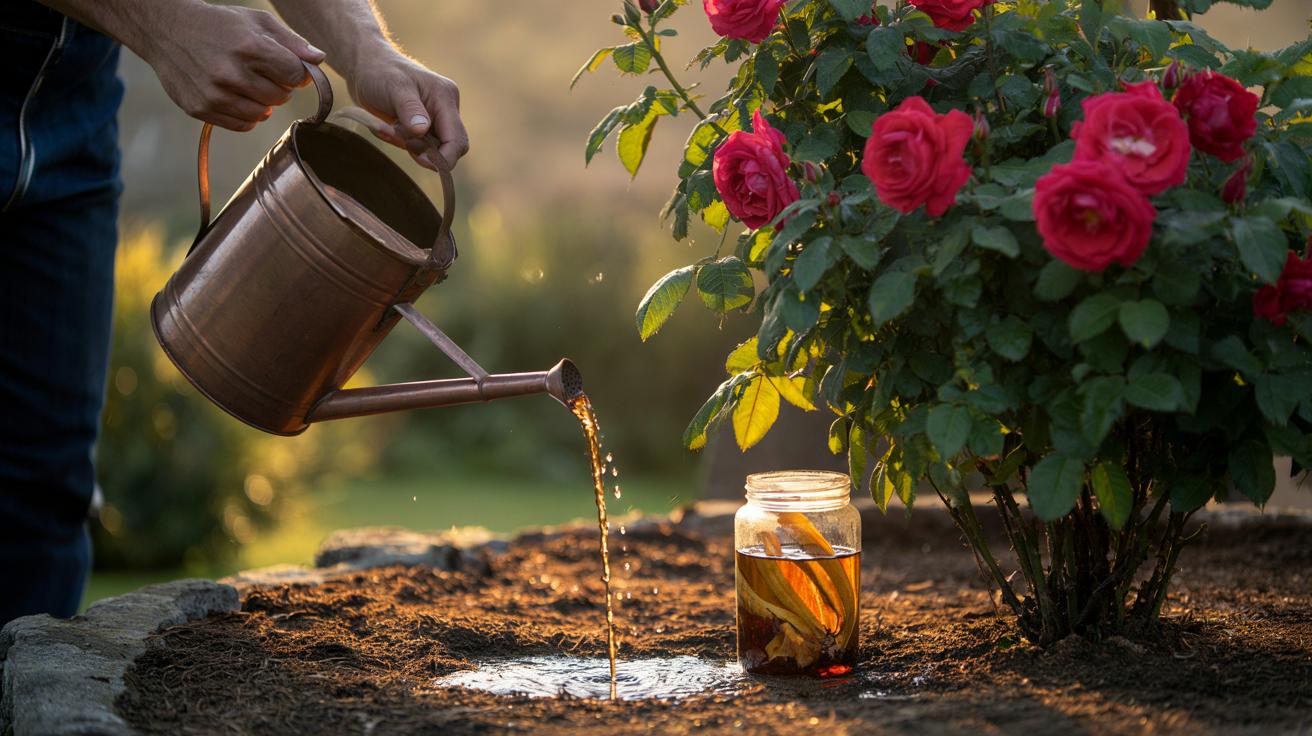
- ⏱️ “Overnight” results are a myth; a diluted, soil-applied fermented peel tea can sharpen blooms within days if buds are swelling, but overapplication risks odour, salt stress and pest issues.
- 🛠️ Best practice: mulch with compost to hold moisture, keep soil pH around 6.0–6.5, deadhead after flushes, use a balanced, low-fast-N rose feed, and add seaweed for trace elements.
- 🧭 Watch signals: K deficiency shows as leaf-edge scorch and weak peduncles; apply lightly, target the dripline, water in, then observe and stop once stems firm and margins improve.
Gardeners love a quick win. Few tips travel faster than the claim that banana peel turns ordinary roses into fireworks overnight. There’s truth inside the hype, though it’s wrapped in biology, timing, and technique. The secret is potassium—the “K” in N‑P‑K—which governs water balance, sugar transport, and flower power. Use it well and your shrubs respond with tighter buds, richer colour, and sturdier stems. Use it poorly and you’re feeding slugs. This guide separates myth from method, showing how to harness banana peel sensibly, how fast you can realistically expect results, and when a more precise boost makes all the difference for bloom-hungry roses.
How Potassium Supercharges Rose Blooms
Potassium doesn’t build tissue in the way nitrogen or phosphorus do. It’s a regulator. In roses, K opens and closes stomata, drives water movement, and mobilises carbohydrates from leaves to buds. That matters at crunch time. When flower trusses are setting, K ensures sugars arrive exactly where pigments develop and petals expand. You see deeper hues, better petal substance, less flop. It also stiffens cell walls, so stems carry big heads without buckling and foliage shrugs off minor disease pressure.
Deficiency tells on leaves first: marginal scorch, bronzing, weak peduncles, lots of leaf but reluctant bloom. Correcting K at the right moment can flip the plant’s priorities from leafy sprawl to disciplined, bud-focused growth. Yet speed hinges on form. Root-available soluble K acts faster than slow mineralisation from scraps. Soil moisture and pH matter, too: dry, compacted, or alkaline beds throttle uptake. That’s why gardeners who swear by banana peels often pair them with compost and consistent watering, creating the conditions that let K do its quiet, powerful work.
Banana Peel: What It Really Delivers
Banana peel is famously potassium-rich, with traces of calcium and magnesium, but very little nitrogen. That balance suits roses approaching bloom, when you want colour and firmness rather than lush, sappy growth. Fresh peels, however, break down slowly in cool British soils and can attract pests if buried in clumps. Dried or fermented preparations release K more readily. If you’re chasing a fast lift for buds already forming, choose a form that makes potassium available within days, not weeks. Composting peels first is the cleanest option for long-term soil health; fermentation or teas are the sprint options, used sparingly.
Here’s a quick comparison to steer your choice.
| Method | Preparation | Speed of Effect | Pros | Risks |
|---|---|---|---|---|
| Fresh Peel Pieces | Chop and bury 10–15 cm deep | Slow (weeks) | Simple, zero-cost | Pests; uneven breakdown |
| Dried Peel Powder | Oven-dry, grind, sprinkle, mulch | Moderate | Cleaner, more uniform | Overuse can salt roots |
| Fermented Peel “Tea” | Soak peels 24–48 hrs, dilute 1:5 | Fast | Quick K availability | Odour; anaerobic if over-steeped |
| Composted Peels | Add to hot compost, apply | Slow–steady | Improves soil, fewer pests | Not a rapid fix |
Overnight Results? Realistic Expectations and Best Practices
Can banana peel make roses pop by morning? Not quite. But you can nudge timing. If buds are already swelling, a light, root-zone drench with a fermented peel solution can supply potassium that’s taken up within days, sharpening colour and petal finish on the current flush. The closer you apply to visible bud development—without overdoing it—the more noticeable the lift. Keep it gentle: one litre of diluted “tea” per established shrub, then plain water to wash it in. Avoid foliar drenching flowers; aim for soil saturation around the dripline where fine feeder roots sit.
Layer smart habits for faster gains. Mulch with mature compost to hold moisture, because K transport rides water. Test pH; roses favour 6.0–6.5, where K availability is high. After the first flush, deadhead, feed with a balanced rose fertiliser low in fast N, and repeat a mild banana-based drench only if growth looks K-hungry. If blackened margins ease and stems firm up, stop. More is not better. Combine with seaweed extract for trace elements that support stress resilience and you’ll stack several small advantages into one striking display.
Banana peel isn’t wizardry. It’s a tidy, circular way to deliver potassium when your roses can use it most, especially if you pick the right preparation and match it to the plant’s stage. Think timing, not magic. Think soil, not just supplements. Apply lightly, watch closely, and let K fine‑tune what your careful pruning and watering already set in motion. Ready to trial a banana-based boost alongside your usual routine this week, and observe which method actually moves the needle in your garden?
Did you like it?4.4/5 (25)