In a nutshell
- 🧂 Salt defines texture: boosting ionic strength firms the pasta’s surface, reduces sloughing, and clarifies water; aim for 1–2% salinity for clean bite and better sauce cling.
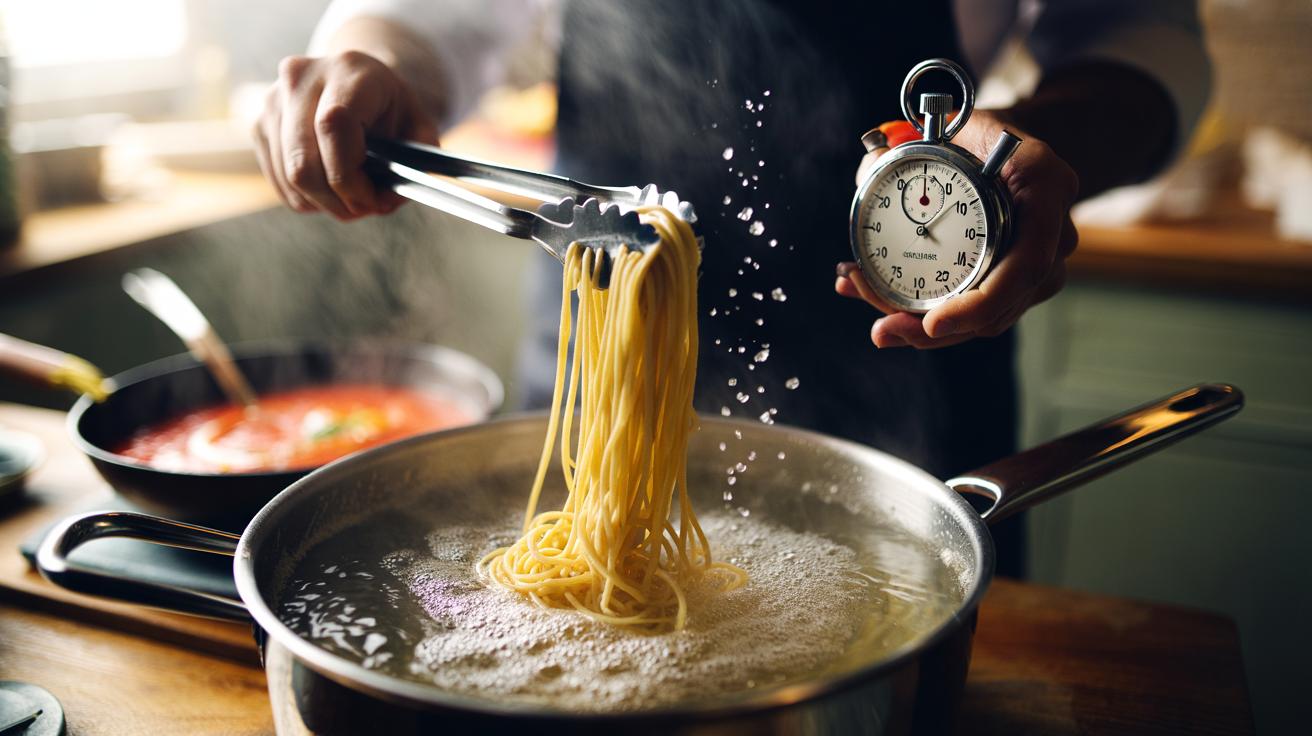
- ⏱️ The 30-second al dente window: taste early, watch the pale core dot vanish, then pull pasta 30–60 seconds before ideal and finish directly in the sauce.
- 🔥 Control heat and time: keep a rolling boil, stir in the first minute, and start timing when the water reboils; account for carryover cooking and pan-finishing heat.
- 🍝 Match shape to sauce and pace: thick rigatoni holds a longer cue, thin spaghetti turns limp fast; ridges and rough surfaces grip emulsified sauce for superior cling.
- 💧 Harness pasta water: reserve 50–100 ml to emulsify and adjust final salinity; a comparative guide shows higher salinity tightens the al dente window.
Salted water, rolling boil, a watchful eye: those are the three quiet secrets behind pasta perfection. The fourth is time. Not minutes. Seconds. In a well-salted pot, spaghetti or rigatoni slides from firm to yielding fast, and the sweet spot arrives with startling brevity. Chefs call it al dente; I call it the “thirty-second truth”. The reason isn’t just flavour. It’s chemistry, heat, and control. Get them aligned and you win that signature bite that holds sauce like a handshake. Miss it and the pasta slumps. The difference between brilliant and bloated is often half a minute—and a dash of salt that does far more than season.
The Science Behind Salt and Starch
Start with the myth: salt makes water boil hotter, slashing cook time. Technically true, practically trivial. A tablespoon per litre lifts the boiling point fractionally. That’s not the victory here. In reality, salt changes the surface behaviour of pasta. Wheat starch granules swell as they heat; proteins relax; water floods the structure. In salted water, the surrounding solution has higher ionic strength, which slows surface starch solubilisation and helps the semolina’s protein network stay coherent. The outcome is a firmer shell and a cleaner bite, even as the core hydrates. Salt doesn’t hurry pasta; it defines its edges.
Think of it as controlled permeability. With roughly 1–2% salinity (10–20 g salt per litre), the pasta’s exterior sets just enough to resist fraying, reducing “sloughing” into the pot and keeping the water clearer. Clarity matters: less free starch makes for better emulsification when you marry pasta with sauce later. It’s also why finishing in the pan works so well; the exterior holds while the interior completes. When that equilibrium is reached, the texture snaps, then immediately softens. And that is where the famed 30-second window arises: a tight transition from perfect resistance to overdone.
The 30-Second Al Dente Window
Al dente isn’t guesswork. It’s a brief alignment of core and surface. The outside must be tender, the centre no longer chalky, yet still offering resistance. In salted water, those conditions converge fast. Taste a strand two minutes before the packet’s lower time. Watch for a pale dot in the centre when you bite through—a visual cue of the final minute to go. Then taste every 20 seconds. When the dot disappears but the bite still talks back, you have your moment.
Two forces conspire to steal it. First, carryover cooking: pasta keeps climbing once drained, especially if it sits in a colander. Second, pan finishing: the sauce simmers, heat persists, texture continues to evolve. The solution is counterintuitive but reliable—stop early. Pull the pasta 30–60 seconds before ideal, transfer directly to the sauce, and let the final heat happen in context, where starch and fat emulsify into gloss. Short shapes tolerate a touch more finish time; long strands go from perfect to flabby quicker. The window is narrow; move the pasta, not the deadline.
One more timing discipline: start your timer when the water returns to a full, rolling boil after the pasta goes in. Stir in the first minute to prevent sticking, then occasionally. Keep the heat high so the boil never slackens; fluctuating temperatures widen the window unpredictably and can leave you with pasty exteriors and underdone cores.
How Much Salt and When to Add It
Season the water like a light broth, not the sea. For most kitchens, that’s 10–15 g salt per litre (about 1–1.5%). Restaurants frequently push to 2% for assertive sauces, but balance is key, especially if your sauce is already well-seasoned. Add salt once the water is boiling and stir to dissolve; it disperses quickly and helps avoid undissolved crystals settling on the pan’s base. Taste the water—yes, really. You’re calibrating more than flavour; you’re setting texture boundaries.
| Water (per litre) | Salt (g) | Approx. Salinity | Taste/Texture Note | Al Dente Window |
|---|---|---|---|---|
| 1 L | 0 g | 0% | Flat flavour, fuzzier edges | 30–60 s, less distinct |
| 1 L | 10 g | 1.0% | Balanced, everyday cooking | 30–45 s, clear cues |
| 1 L | 15 g | 1.5% | “Restaurant” snap, vivid sauce carry | 20–30 s, tight control |
| 1 L | 20 g | 2.0% | Briny; watch overall salt | 15–25 s, very fast |
If you’re salt-sensitive, start at 0.75% and finish seasoning in the pan, leaning on pasta water to amplify flavour without oversalting. Remember: sauces reduce; salt concentrates. Keep the final seasoning flexible by undercooking slightly and adjusting salinity as you emulsify.
Shape, Sauce, and Surface: Matching Texture to Taste
Different shapes, different physics. Thick tubes like rigatoni carry a generous core; their al dente signal lingers slightly longer. Thin strands like spaghetti or linguine flip from ideal to limp in a heartbeat. Ridges and rough extrusions wage a quiet war against slippage, gripping sauce as the starch-and-fat emulsion forms. Choose shape for the sauce, but pace for the texture: a fatty ragù welcomes firm chew, delicate seafood sauces demand tender restraint.
Finish in the sauce for 30–90 seconds with 50–100 ml of reserved, salty, starchy water. That liquid is functional: it thins, then thickens, letting sauce cling and shine without heaviness. Keep the pan lively, not furious; you want micro-bubbles and stirring, not violent reduction. Taste for salt at the end. Salinity should season the pasta itself, allowing you to nudge the sauce rather than rescue it. If it feels tight, splash more water; if it tastes shy, a pinch of salt in the pan, not the pot, restores clarity.
Serve immediately. Heat fades, starch sets, sauce seizes. A warm bowl buys you crucial seconds. Then, trust your senses. The eye tells you gloss; the fork tells you cling; the bite tells you truth. When the pasta resists, then yields, you’ve nailed it.
Pasta perfection isn’t romantic mystique; it’s disciplined timing, smart salinity, and the confidence to stop early. Salt shapes the surface, water sets the stage, and those last 30 seconds lock in texture that survives the walk to the table. Once you see the signs—the vanishing core dot, the springy tug, the sauce that coats rather than puddles—you’ll never untaste them. Ready to test your own threshold tonight: what salinity and shape will you play with to find your perfect al dente window?
Did you like it?4.7/5 (21)