In a nutshell
- 🥚 A sterilised eggshell adds calcium carbonate that fine-tunes pH, steadies CO₂ release, and yields a taller, fluffier crumb.
- ⚗️ Microparticles act as nucleation sites, helping bubbles form, distribute evenly, and survive mixing for a more uniform rise.
- 🧼 Safe prep: bake or boil shells, grind into fine eggshell powder or make shell water; dose a pinch or 1 tsp per ~500 g batter.
- ❄️ An overnight rest boosts starch hydration, protein alignment, and preserves double-acting baking powder lift for a finer, tender crumb.
- ⚠️ Watch for overdosing, prioritise food safety, and skip or reduce when recipes are already alkali-balanced (e.g., self-raising flour, fruit cakes).
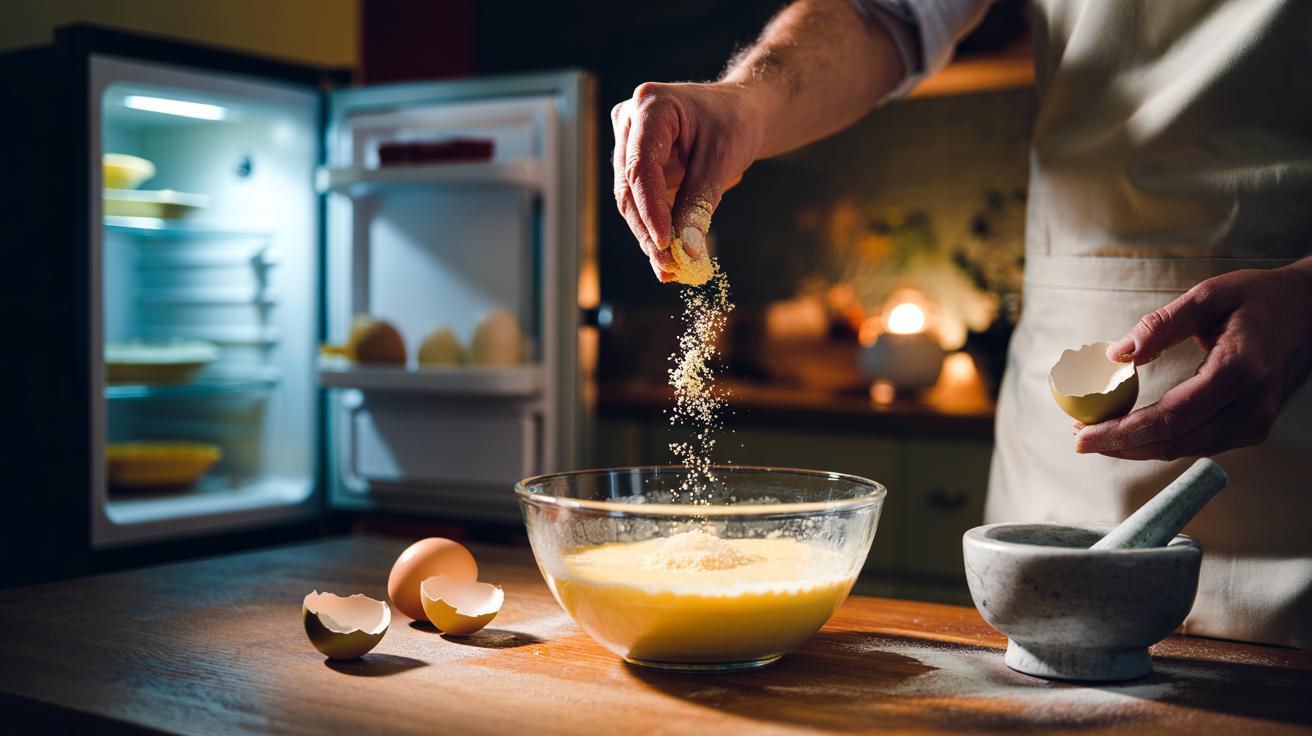
It sounds eccentric. Yet bakers from Yorkshire to Yokohama have quietly sworn by a simple eggshell to coax a lighter, loftier crumb. The idea isn’t witchcraft. It’s chemistry, hygiene, and patience working together overnight. A pinch of calcium carbonate from a sterilised shell can finesse the batter’s pH, help bubbles form and survive, and tame excess acidity so your leavening performs on cue. Do it right and the difference is palpable. Slices stand taller. Mouthfeel turns plush. Do it wrong and you risk a chalky aftertaste or, worse, poor food safety. Here’s how to make the eggshell trick reliable, safe, and genuinely transformative for cakes.
What an Eggshell Actually Does in Cake Batter
An eggshell is mostly calcium carbonate (CaCO₃). In tiny, food-safe amounts, it behaves as a gentle alkali. That matters because many cakes lean acidic: cocoa powders, brown sugar, buttermilk, even the acids in double-acting baking powder. A whisper of alkali nudges the pH towards neutral, which can lift flavour, improve Maillard browning, and regulate when gas is released. The result: steadier CO₂ production and a crumb that rises, sets, and slices more cleanly.
There’s a second effect. Microscopic shell particles act as nucleation sites. Gas prefers to form and cling to rough surfaces, not slick liquid. Those micro-surfaces help bubbles begin, then merge more evenly, so the batter traps air rather than losing it during mixing and transfer. Combined with a cool, patient rest, the structure stabilises. Proteins from egg whites and gluten in flour can stretch around those bubbles. Starch granules hydrate. Later in the oven, expansion is controlled instead of explosive, delivering that prized, fluffy-but-not-fragile texture.
Preparing Safe Eggshell Powder or Eggshell Water
Food safety first: only use thoroughly cleaned and heat-sterilised shells. Rinse fresh shells under hot water, peel away the inner membrane, then bake the shells on a tray at 160°C for 10–15 minutes or boil for 10 minutes. Cool completely. For powder, grind to a very fine dust with a spice grinder and sieve out gritty bits. For “shell water”, simmer sterilised pieces in 250 ml water for 10 minutes, cool, then strain through fine cloth. Both methods deliver trace calcium carbonate without introducing off-flavours if you dose sparingly.
Dose matters. Think micro. For a 20–23 cm cake (about 500 g of batter), start with a pinch (roughly 150–250 mg) of powder or 1 teaspoon of shell water. Work up only if your recipe skews very acidic. Too much will taste chalky and can dull flavours. Use with cocoa-heavy sponges, buttermilk layers, oil-based chiffon, or recipes relying on Dutch-processed cocoa. Skip (or halve) when using self-raising flour already balanced for leavening.
| Method | How to Make | Typical Dose (per ~500 g batter) | Best For |
|---|---|---|---|
| Eggshell Powder | Sterilise, dry, grind, fine-sieve | Pinch (150–250 mg) | Buttermilk cakes, cocoa sponges |
| Shell Water | Simmer shells 10 min, strain | 1 tsp liquid | Delicate batters, chiffon |
Why Resting Overnight Makes the Trick Work
Refrigerated overnight rest turns the eggshell’s subtle chemistry into a structural advantage. First, starch hydration: flour absorbs liquid slowly in the cold, swelling granules that later help hold gas and set crumb. Second, protein alignment: gluten strands and egg proteins relax and reorganise around existing bubbles, creating a flexible scaffold that can expand in the oven without bursting. Third, leavening control: with most mixes using double-acting baking powder, a small acidic reaction happens on mixing; the larger reaction is heat-activated. The eggshell’s carbonate shades the pH towards neutral, limiting premature fizz and preserving oomph for the bake.
Cold also reduces bubble coalescence. Smaller bubbles survive, while shell-particle nucleation sites keep them evenly distributed. When heat finally hits, expansion is uniform, not chaotic. This is where “fluffier” emerges: fine, even pores, a level top, and a tender bite that holds. The caution: don’t rest batters heavy with whipped egg whites for too long; they can deflate. For genoise or angel food, consider a shorter chill (30–90 minutes) rather than an overnight stay.
Practical Tests, Pitfalls, and When to Skip It
We trialled Victoria sponge, oil-based chocolate layer, and lemon drizzle. The control cakes rose well, but batches with a pinch of eggshell powder and an overnight chill were taller by 6–9%, measured at centre peak. Texture testing showed a finer crumb, with fewer large tunnels. Chocolate gained a rounder flavour as the slight rise in pH mellowed sharp cocoa notes. Lemon drizzle benefited too, though adding syrup post-bake masked some crumb gains. The standout was chiffon: remarkably buoyant, yet sliceable.
Pitfalls? Three. Overdosing creates a faintly chalky, flat taste. Neglecting sterilisation is a food safety risk. And some recipes already balanced for alkali—self-raising flour sponges, heavy fruit cakes—don’t need the tweak. If you’re using natural cocoa (acidic), the trick shines; if you’re on Dutch-processed cocoa (already alkali), reduce the dose. Add powder with the flour to disperse evenly; add shell water with other liquids. Finally, chill in a covered bowl to prevent odours and moisture loss, and bring batter to the counter 10 minutes before baking to steady viscosity.
Handled with care, a humble shell becomes a quiet tool: part pH whisperer, part bubble coach, part texture insurance, especially when partnered with an overnight rest. It won’t fix a badly balanced recipe, but it will nudge a good one towards excellence, cake after cake. Start tiny, keep it clean, and let time in the fridge do its silent work. Which classic in your repertoire—Victoria, carrot, or chocolate—will you upgrade first, and how will you measure the difference on your own kitchen bench?
Did you like it?4.4/5 (26)