In a nutshell
- 🔬 The fast science: acid and steam disrupt and lift fond (Maillard residues), so stuck-on flavour dissolves in about a minute.
- 🥄 Practical method: pour off fat, splash 60–120 ml vinegar, scrape as it boils, reduce, then finish with butter to emulsify a glossy deglaze.
- 🍾 Smart choices: tailor vinegar selection (white wine, cider, sherry, red wine, balsamic) and adjust ratios with stock, a touch of sugar, and fat for balance.
- 🛡️ Gear and safety: prefer stainless steel; deglaze cast iron quickly; go gentle on non-stick; avoid long acidic simmer in aluminium; manage heat and vapour.
- 🍳 Winning result: a cleaner pan and a deeply flavoured pan sauce in a one-minute move that upgrades weeknights and impresses guests.
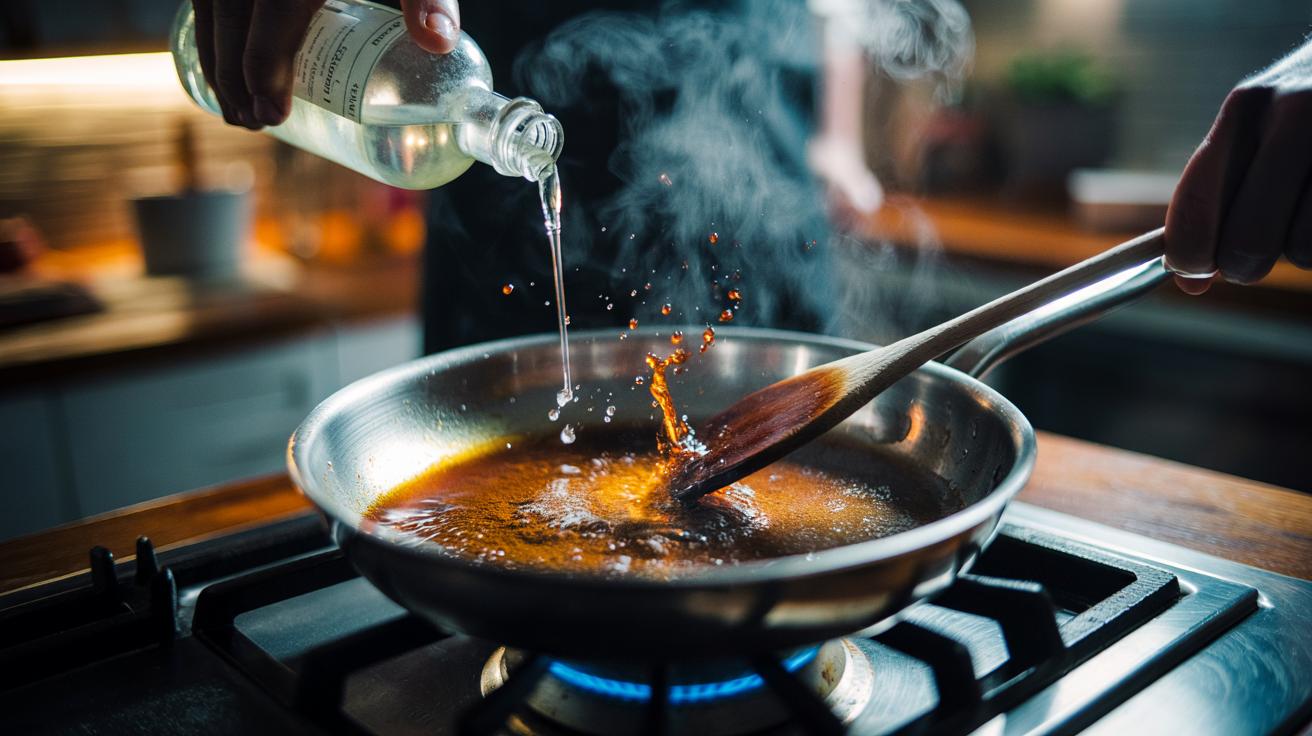
After searing a steak or browning onions, the caramelised brown layer glued to the metal looks immovable. Then a splash of vinegar hits the heat and, as if by magic, everything slides free. That “magic” is a neat duet of acidity and steam. Acetic acid loosens browned proteins and sugars, while a turbulent boil wedges microscopic bubbles beneath the crust. Seconds later, you are scraping up flavour instead of scrubbing it off. It is quick. It is frugal. It turns mess into dinner. Here is why vinegar deglazing works in about a minute, and how to bottle that speed into a silky, everyday pan sauce.
The Fast Science Behind Vinegar Deglazing
The browned residue in the pan—chefs call it fond—is a network of Maillard products: dehydrated sugars, denatured proteins, and fat-soluble flavour compounds tightly bonded to hot metal. Vinegar’s acetic acid (typically 4–8%) donates protons that disrupt those bonds, increasing the fond’s solubility just as liquid begins to boil. At the same time, the liquid penetrates microscopic crevices. When it flashes to steam, it pries from beneath, turning cement into confetti. That is why a pan that looked scorched can release its treasure in under a minute—acid weakens, steam lifts, and agitation finishes the job.
Heat is the amplifier. A hot surface supercharges evaporation, creating intense bubbling that shears particles from the base and keeps them suspended. The dissolved fond, now a deglaze, becomes the foundation of a sauce full of savoury depth. Viscosity matters too: as reduction concentrates sugars and gelatin, the liquid clings to loosened bits and carries them into the pool. The result is both cleaner metal and richer flavour, achieved with a single pour and a few decisive scrapes.
Step-by-Step: From Stuck Fond to Silky Pan Sauce
First, pour off surplus fat, leaving a thin sheen. Return the pan to medium-high heat until the fond just hints at smoking. Add 60–120 ml vinegar—straight, or cut 1:1 with water or stock for a softer edge. The pan will roar. Tilt to pool the liquid and scrape with a wooden spoon, chasing the bubbles across the surface. Those first 20–40 seconds matter: keep the liquid moving where the fond is darkest and it will lift rapidly. As the bottom clears, you will see metal again and a tawny liquid gathering flavour.
Turn that liquid into dinner. Reduce until it lightly coats the back of a spoon, then swirl in a knob of butter to emulsify and gloss. Season. A teaspoon of mustard, a splash of cream, or chopped herbs can pivot the profile in seconds. For steak, red wine vinegar and black pepper sing; for chicken, cider vinegar with thyme; for mushrooms, sherry vinegar and a dash of soy. Stand back over gas, add liquid off the flame if using spirits, and mind the vinegar vapour near your eyes. Serve immediately over the resting meat or vegetables.
Choosing the Right Vinegar and Ratio
Pick your acid for both strength and character. Distilled white is brisk and neutral; white wine vinegar is bright; cider is fruity; sherry brings nutty depth; red wine vinegar is bold; rice vinegar is gentle; balsamic is sweet and syrupy. Balance sharpness by cutting vinegar with water or stock. A 1:1 mix keeps bite; 1:2 softens the edges; a teaspoon of sugar or honey rounds assertive versions. If your pan sauce tastes harsh, keep reducing slightly, then finish with butter or cream—fat smooths acidity without muting aroma.
| Vinegar | Typical Acidity (%) | Flavour Profile | Best For | Suggested Ratio (Vinegar:Liquid) |
|---|---|---|---|---|
| White Wine | 6 | Bright, clean | Chicken, fish | 1:1 |
| Cider | 5 | Fruity, soft | Pork, autumn veg | 1:1–1:2 |
| Sherry | 7 | Nutty, rounded | Mushrooms, steak | 1:1 |
| Red Wine | 6 | Bold, tannic | Beef, lamb | 1:1–1:2 |
| Rice | 4 | Gentle, mellow | Delicate fish, tofu | 1:0.5 |
| Distilled White | 5 | Neutral, sharp | Vegetables, cleaning | 1:2 |
| Balsamic | 6 | Sweet, syrupy | Poultry, roots | 1:0 (reduce gently) |
| Malt | 5 | Toasty, tangy | Sausages, chips | 1:1–1:2 |
As a rule of thumb, use 60–120 ml of vinegar (or vinegar plus liquid) for a 28–30 cm pan. Salt and a touch of sugar nudge balance; butter or olive oil adds body; herbs add lift. Keep tasting—your palate is the metronome.
Pans, Heat, and Safety: The Practicalities
Stainless steel is ideal: it browns aggressively and tolerates acids. Cast iron also works, but do not simmer vinegar for long or you may strip seasoning; deglaze quickly and move the liquid to a small saucepan to reduce. Enameled cast iron is safe and forgiving. Non-stick will deglaze but does not brown the same; keep heat moderate and skip vigorous scraping. Avoid prolonged acidic reduction in bare aluminium; short, hot deglazing is usually fine, but extended simmering can pit reactive surfaces.
Control the boil. If cooking over gas, momentarily kill the flame when adding large splashes to reduce flare risk, then relight. Use a long-handled wooden spoon, keep your face back, and crack a window to vent vinegar vapour. Do not chase fond to black—burnt residues taste bitter. Aim for deep mahogany. When the bottom is mostly clear and the bubbles sound lower and slower, you are ready to reduce, enrich, and pour. Quick in, quick out—that is the secret to speed and shine.
In the space of a minute, vinegar turns stuck-on flavour into a clean pan and a ready-made sauce, powered by the twin forces of acid and steam. It is a thrifty technique, brilliant on weeknights, but precise enough for dinner parties. Choose your vinegar, control the boil, and finish with fat for balance. Your washing-up shrinks, your flavours expand. Once you have felt the fond lift and smelled that first plume, you will never skip this step again. Which vinegar will you reach for tonight, and what pan would you most like to rescue and transform into a sauce?
Did you like it?4.4/5 (30)